



Install Steam
sign in
|
language
简体中文 (Simplified Chinese)
繁體中文 (Traditional Chinese)
日本語 (Japanese)
한국어 (Korean)
ไทย (Thai)
Български (Bulgarian)
Čeština (Czech)
Dansk (Danish)
Deutsch (German)
Español - España (Spanish - Spain)
Español - Latinoamérica (Spanish - Latin America)
Ελληνικά (Greek)
Français (French)
Italiano (Italian)
Bahasa Indonesia (Indonesian)
Magyar (Hungarian)
Nederlands (Dutch)
Norsk (Norwegian)
Polski (Polish)
Português (Portuguese - Portugal)
Português - Brasil (Portuguese - Brazil)
Română (Romanian)
Русский (Russian)
Suomi (Finnish)
Svenska (Swedish)
Türkçe (Turkish)
Tiếng Việt (Vietnamese)
Українська (Ukrainian)
Report a translation problem

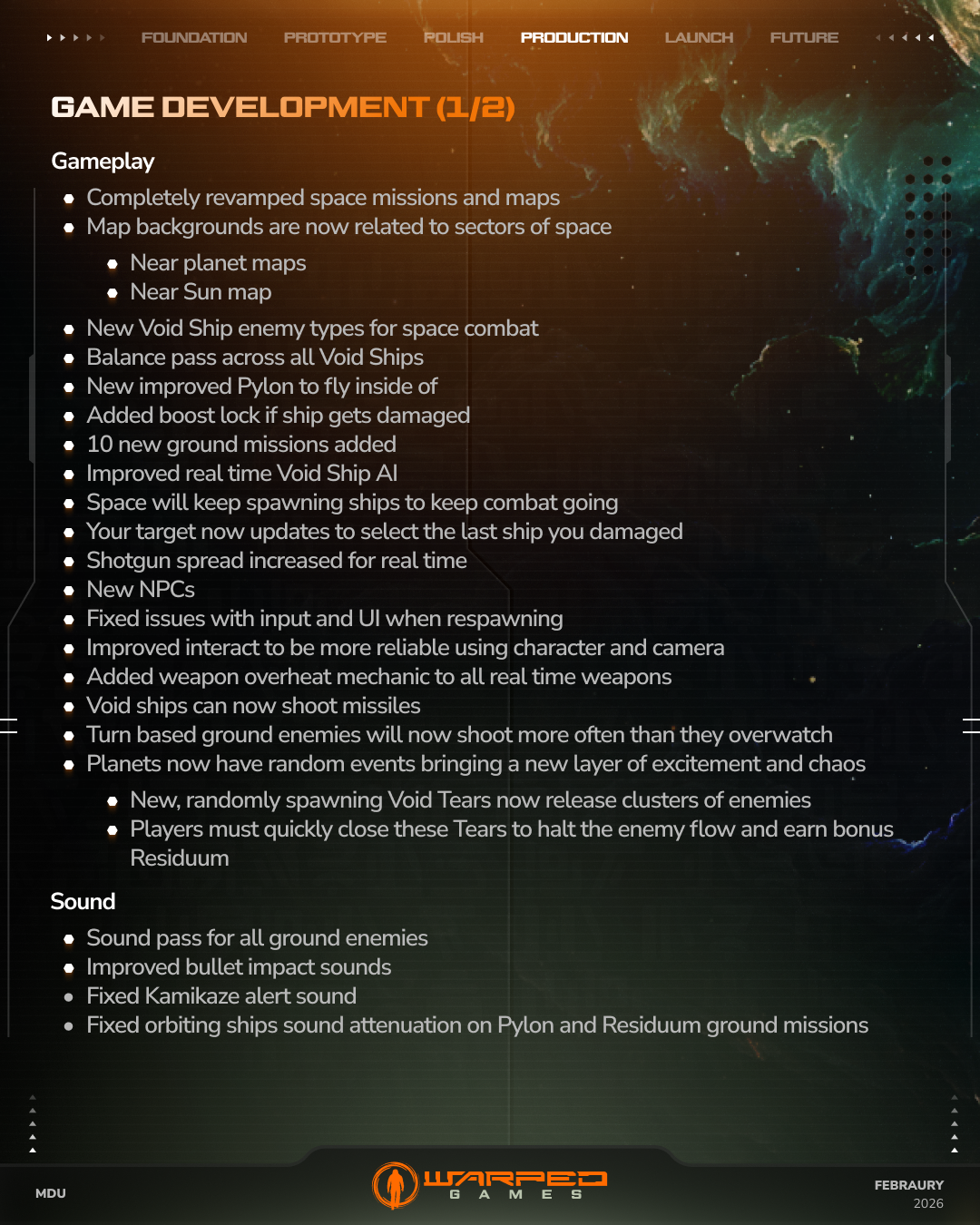 Space has seen the biggest transformation. Missions now take place across distinct sectors, with different environments near planets and the sun which has made a huge difference in making each encounter feel more contextual and varied. Combat has been reworked to stay active, with ships continuously spawning to maintain pressure, new Void Ship enemy types entering the fight, and improved AI making engagements more dynamic. Systems like weapon overheat, missile-equipped enemies, boost lock on damage, and smarter targeting all add more moment-to-moment decisions to make.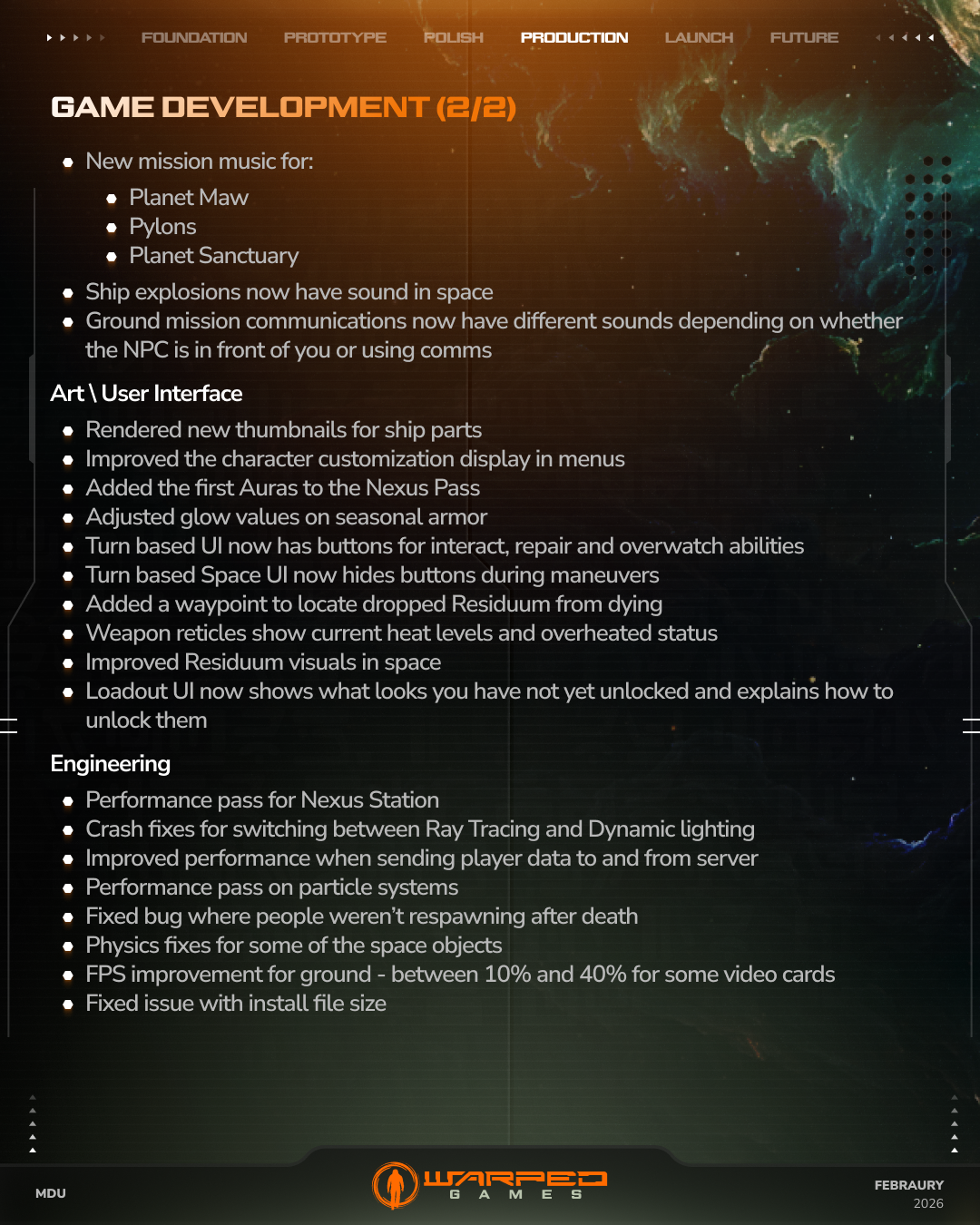


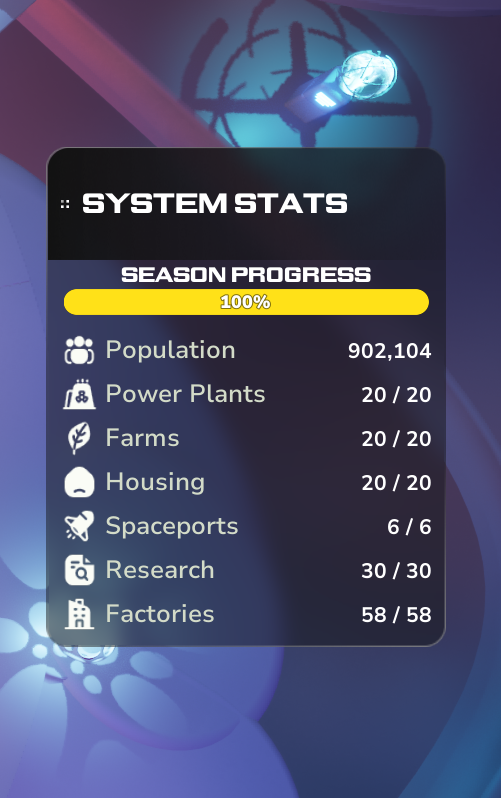
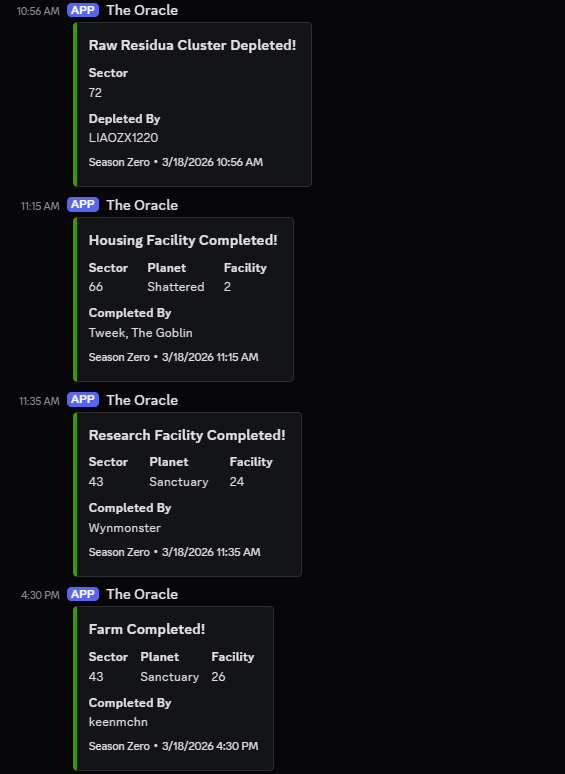
 A full season runs about 4 months. We're doing it in one week. Progression and unlocks are accelerated so you can actually see how everything connects. Sectors, planets, pylons, exploration. Every mission feeds the system. This will help players see how their actions affect all in the Universe, and also helps the team stress test progression and make sure all the systems are nice and oiled.


 Loading

