

Install Steam
login
|
language
简体中文 (Simplified Chinese)
繁體中文 (Traditional Chinese)
日本語 (Japanese)
한국어 (Korean)
ไทย (Thai)
Български (Bulgarian)
Čeština (Czech)
Dansk (Danish)
Deutsch (German)
Español - España (Spanish - Spain)
Español - Latinoamérica (Spanish - Latin America)
Ελληνικά (Greek)
Français (French)
Italiano (Italian)
Bahasa Indonesia (Indonesian)
Magyar (Hungarian)
Nederlands (Dutch)
Norsk (Norwegian)
Polski (Polish)
Português (Portuguese - Portugal)
Português - Brasil (Portuguese - Brazil)
Română (Romanian)
Русский (Russian)
Suomi (Finnish)
Svenska (Swedish)
Türkçe (Turkish)
Tiếng Việt (Vietnamese)
Українська (Ukrainian)
Report a translation problem

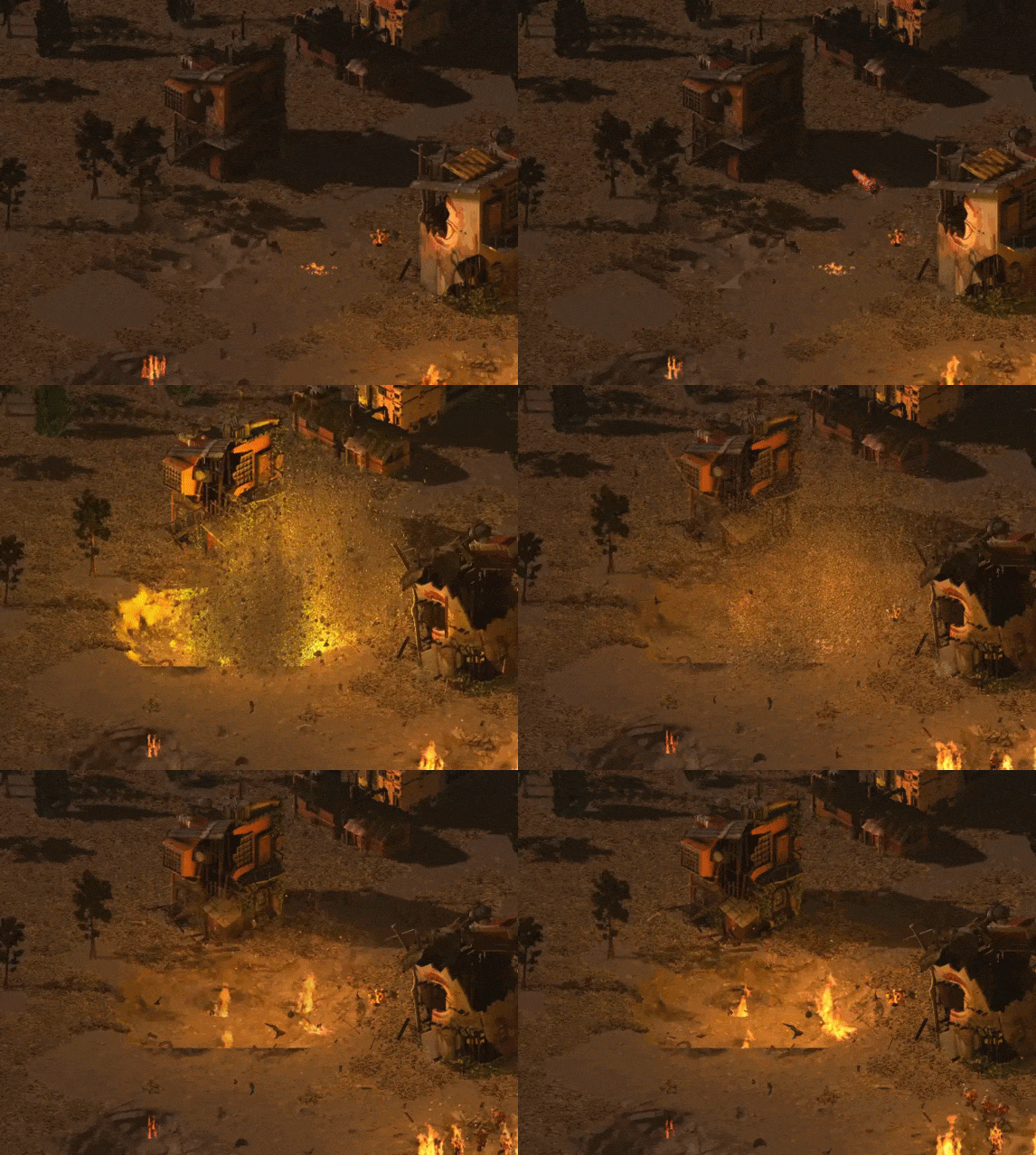
So far, D.O.R.F. uses 2D sprites as in most classic RTS games, with models created from 3D renders taken from different angles to give the illusion of 3D dimensional movement. This currently forces us to use baked-in lighting, with all objects and their cast shadows being affected by sunlight from a fixed position, and shadows themselves are just a flat image with no actual depth data. While this is simple to set up, it does create issues; as can be seen in the above image, it can result in artifacting, such as shadows being cast flatly onto objects in a nonsensical way, or shadows not casting onto objects at all (see the shadow from the tree casting onto the trash can in the lower right of the image). There are also all sorts of depth-sorting issues, such as sprites rendering above or below objects in a nonsensical way (for example a unit entering a building but then still appearing overlaid on the building rather than disappearing beneath its roof). This system isn’t ideal.
Here we can see a sprite for the powerplant. This is called the Diffuse sprite. This is the most important sprite, since while it possesses no lighting information, and itself is flatly lit, it’s the most obvious piece of visual information for the Powerplant structure ingame. Of course, to light it, we’ll need some additional sprites.
Here we have the Normal sprite. Any 3D artists or aficionados of how modern games work under the hood should recognize this concept, as it’s almost universally used in 3D games now, albeit as a texture applied to a 3D model. Essentially this uses color information to determine facings (so cyan = up, magenta = southeast, blue = southwest, etc). This is what will be used to give the 2D sprite 3-dimensionality, so that light hitting the surface will be applied to each surface correctly, rather than affecting the surface as though it were a flat texture.
And here we have the Depth map (alternatively called Z-Depth). This uses grayscale values to determine distance from the camera (with lighter = closer and darker = farther), and while it also has some application with lighting and shadowing, it will primarily be used in depth-sorting, so that the game engine knows which sprites to render over or under which other sprites. This will ideally cut down on all the Z-fighting issues and problems with objects rendering on-top of other objects incorrectly.
Lastly, we have the most experimental aspect of this system, called the Micro Z-depth sprite, or alternatively the Shadow Sprite. Using a series of Z-depth frames rendered from specific angles, the game will take this Z-depth information and use it to create a 3D mesh on the fly. This mesh will be invisible ingame, but will function as a means from which 2D sprites will cast functional, dynamic shadows onto objects from light sources.
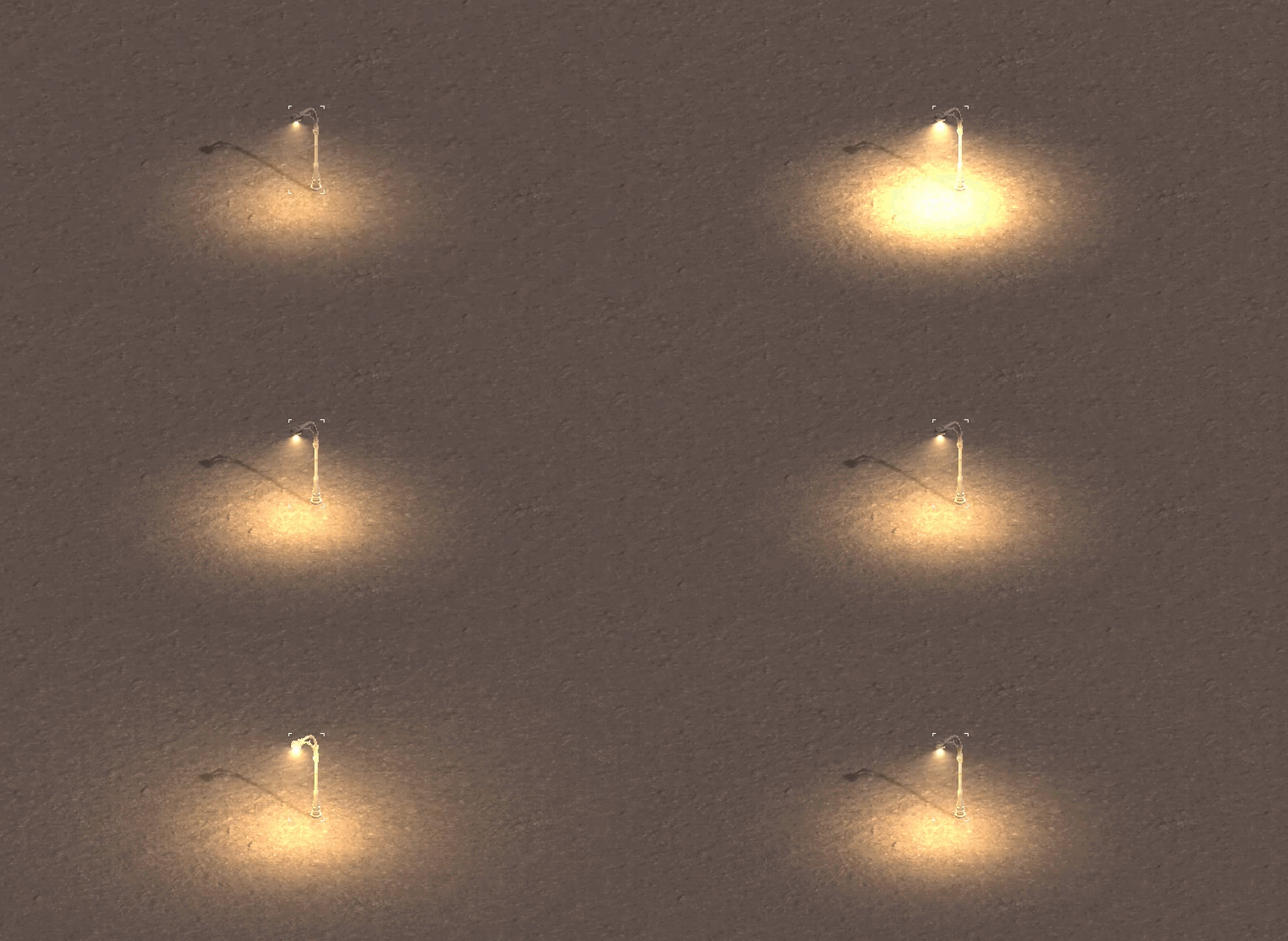
Also, as you may expect, this also allows more lighting options for D.O.R.F. Some maps could have their sunlight position shifted to different angles, allowing for the creation of more believable and atmosphere maps at odd times of day. It also allows for objects to create light dynamically, such as the headlights of vehicles, or lights cast from certain structures. Another major advantage of this system above just having a fully 3D game is that this method of lighting/shading is extremely efficient for creating lots of lights at once. While most 3D games struggle with even a few light sources in an instance, this method of lighting/shading means maps could potentially have dozens (possibly hundreds) of light sources.
Loading
